In international trade, project finance, contract execution, and large-scale commercial transactions, financial security remains a primary concern. Buyers want assurance that suppliers will perform. Sellers want certainty that payment obligations will be met. Lenders want protection against default risks.
This is where an SBLC (Standby Letter of Credit) becomes one of the most valuable financial instruments in modern business.
Whether you’re involved in international trade finance, construction contracts, commodity transactions, infrastructure projects, import-export business, or corporate financing, understanding how an SBLC works can help reduce risk, improve credibility, and unlock larger opportunities.
In this comprehensive guide, you’ll learn:
- What an SBLC is
- How a Standby Letter of Credit works
- Types of SBLCs
- Benefits and risks
- Real-world applications
- A practical case study
- Frequently asked questions
- How businesses use SBLCs to secure transactions
Primary Keyword: What is SBLC
LSI Keywords:
- Standby Letter of Credit
- SBLC financing
- SBLC for international trade
- Trade finance instruments
- Bank guarantee vs SBLC
- Financial Standby Letter of Credit
- Performance SBLC
- SBLC MT760
- International trade finance solutions
- Credit enhancement instruments
What Is SBLC?
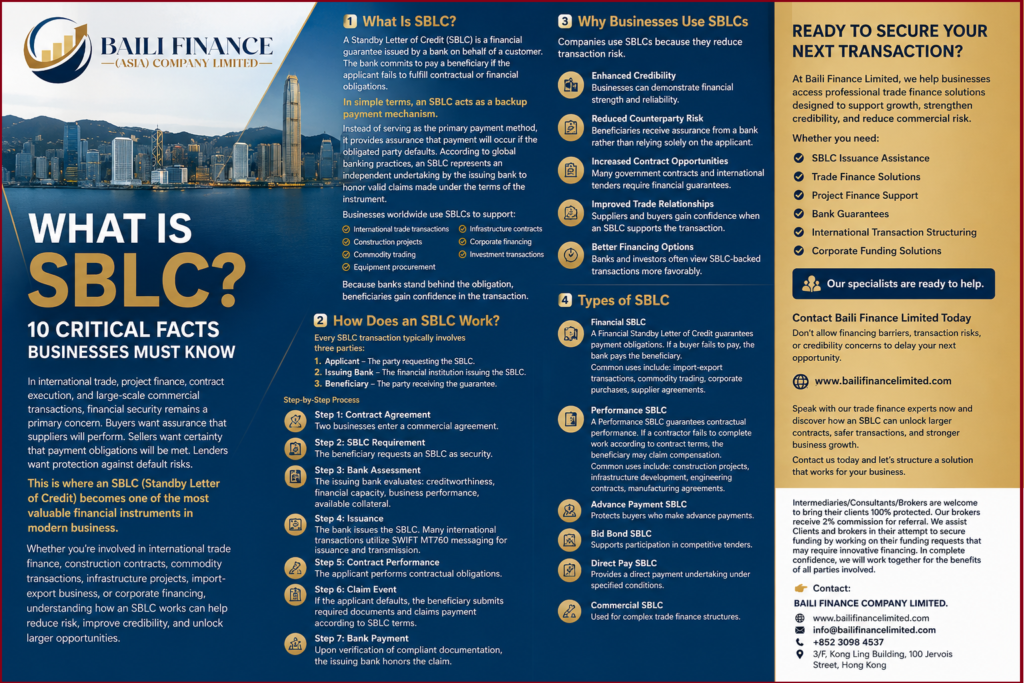
A Standby Letter of Credit (SBLC) is a financial guarantee issued by a bank on behalf of a customer. The bank commits to pay a beneficiary if the applicant fails to fulfill contractual or financial obligations.
In simple terms, an SBLC acts as a backup payment mechanism.
Instead of serving as the primary payment method, it provides assurance that payment will occur if the obligated party defaults. According to global banking practices, an SBLC represents an independent undertaking by the issuing bank to honor valid claims made under the terms of the instrument.
Businesses worldwide use SBLCs to support:
- International trade transactions
- Construction projects
- Commodity trading
- Equipment procurement
- Infrastructure contracts
- Corporate financing
- Investment transactions
Because banks stand behind the obligation, beneficiaries gain confidence in the transaction.
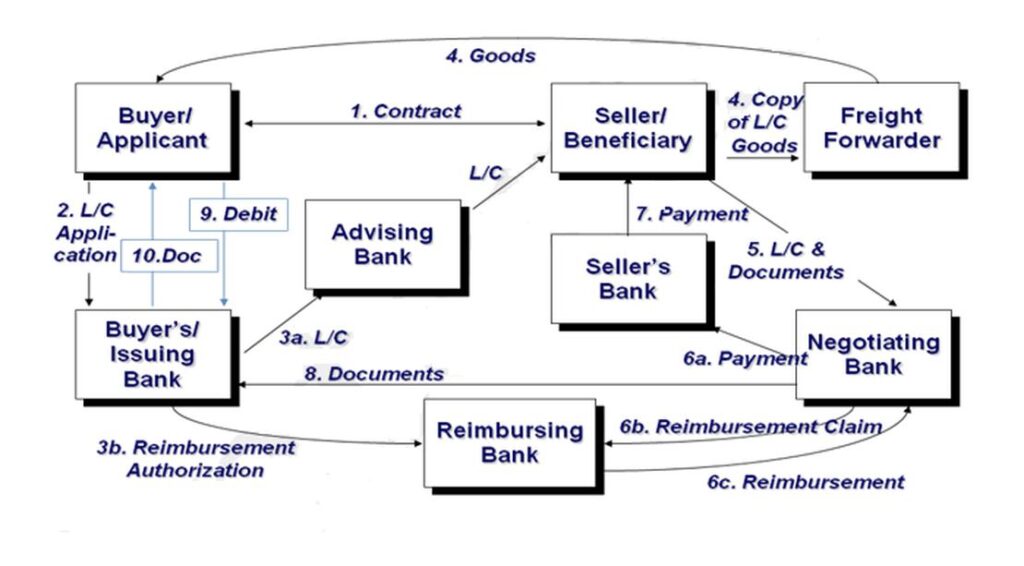
How Does an SBLC Work?
Every SBLC transaction typically involves three parties:
1. Applicant
The party requesting the SBLC.
2. Issuing Bank
The financial institution issuing the SBLC.
3. Beneficiary
The party receiving the guarantee.
Step-by-Step Process
Step 1: Contract Agreement
Two businesses enter a commercial agreement.
Step 2: SBLC Requirement
The beneficiary requests an SBLC as security.
Step 3: Bank Assessment
The issuing bank evaluates:
- Creditworthiness
- Financial capacity
- Business performance
- Available collateral
Step 4: Issuance
The bank issues the SBLC.
Many international transactions utilize SWIFT MT760 messaging for issuance and transmission.
Step 5: Contract Performance
The applicant performs contractual obligations.
Step 6: Claim Event
If the applicant defaults, the beneficiary submits required documents and claims payment according to SBLC terms.
Step 7: Bank Payment
Upon verification of compliant documentation, the issuing bank honors the claim.
Why Businesses Use SBLCs
Companies use SBLCs because they reduce transaction risk.
Major benefits include:
Enhanced Credibility
Businesses can demonstrate financial strength and reliability.
Reduced Counterparty Risk
Beneficiaries receive assurance from a bank rather than relying solely on the applicant.
Increased Contract Opportunities
Many government contracts and international tenders require financial guarantees.
Improved Trade Relationships
Suppliers and buyers gain confidence when an SBLC supports the transaction.
Better Financing Options
Banks and investors often view SBLC-backed transactions more favorably.
Types of SBLC
Financial SBLC
A Financial Standby Letter of Credit guarantees payment obligations.
If a buyer fails to pay, the bank pays the beneficiary.
Common uses include:
- Import-export transactions
- Commodity trading
- Corporate purchases
- Supplier agreements
Performance SBLC
A Performance SBLC guarantees contractual performance.
If a contractor fails to complete work according to contract terms, the beneficiary may claim compensation.
Common uses include:
- Construction projects
- Infrastructure development
- Engineering contracts
- Manufacturing agreements
Advance Payment SBLC
Protects buyers who make advance payments.
Bid Bond SBLC
Supports participation in competitive tenders.
Direct Pay SBLC
Provides a direct payment undertaking under specified conditions.
Commercial SBLC
Used for complex trade finance structures.
SBLC vs Letter of Credit
Many business owners confuse an SBLC with a traditional Letter of Credit (LC).
Letter of Credit
A standard LC serves as a payment mechanism.
The seller receives payment when shipping documents meet LC requirements.
SBLC
An SBLC functions as a contingency instrument.
Payment occurs only if the applicant fails to perform contractual obligations.
| Feature | Letter of Credit | SBLC |
|---|---|---|
| Primary Function | Payment Tool | Guarantee Tool |
| Payment Trigger | Document Presentation | Default Event |
| Trade Usage | Frequent | Backup Protection |
| Risk Coverage | Transaction Risk | Performance Risk |
SBLC vs Bank Guarantee
Although both instruments provide security, differences exist.
Bank Guarantee
A bank guarantee typically compensates a beneficiary after default under applicable terms.
SBLC
An SBLC operates under internationally recognized documentary rules and often follows:
- ISP98
- UCP 600
These frameworks standardize international banking practices.
Industries That Commonly Use SBLCs
International Trade
Importers and exporters frequently require SBLCs.
Construction
Large projects often require performance guarantees.
Energy
Oil, gas, renewable energy, and power projects use SBLCs extensively.
Manufacturing
Equipment suppliers often request financial security.
Infrastructure
Governments and private developers use SBLCs for project assurance.
Commodity Trading
SBLCs help secure large-value transactions involving:
- Gold
- Silver
- Agricultural products
- Petroleum products
- Metals

Advantages of an SBLC
Strengthens Business Reputation
Companies gain credibility when reputable banks support transactions.
Facilitates International Trade
Businesses can transact across borders with greater confidence.
Reduces Default Risk
The issuing bank provides an additional layer of security.
Supports Growth
Organizations can pursue larger contracts and projects.
Improves Supplier Confidence
Suppliers feel more comfortable extending credit terms.
Flexible Financial Instrument
SBLCs support multiple business sectors and transaction structures.
Risks and Considerations
While SBLCs provide significant benefits, businesses should evaluate:
Issuance Costs
Banks charge fees based on:
- Credit profile
- Transaction size
- Risk level
- Duration
Documentation Requirements
Errors in documentation may affect claims.
Expiry Dates
Failure to monitor expiration dates can create exposure.
Regulatory Compliance
International transactions require compliance with banking regulations and sanctions requirements.
Credit Evaluation
Banks assess applicants thoroughly before issuance.
Real-World Example of an SBLC
A manufacturing company in Germany agrees to purchase industrial equipment from a supplier in Singapore worth $5 million.
The supplier has never worked with the buyer before.
To reduce payment risk, the supplier requests an SBLC.
The buyer’s bank issues a Financial SBLC for the contract value.
The supplier proceeds with production and shipment.
If the buyer pays according to contract terms, the SBLC expires unused.
If the buyer defaults, the supplier can submit a compliant claim and receive payment from the issuing bank.
The transaction proceeds smoothly because both parties trust the security provided by the SBLC.
Case Study: Infrastructure Project Financing
Background
A regional government awarded a $150 million infrastructure contract to a construction company.
The government required assurance that project milestones would be completed on schedule.
Challenge
The government needed protection against:
- Delays
- Non-performance
- Contract breaches
Solution
The contractor obtained a Performance SBLC from a leading international bank.
Outcome
The government gained confidence in project execution.
The contractor secured the contract.
The project achieved completion within the agreed timeline.
The SBLC remained unused because contractual obligations were fulfilled.
Key Lesson
In many commercial transactions, the true value of an SBLC lies in the confidence it creates rather than the payment it provides.
International Rules Governing SBLCs
Most SBLCs operate under internationally accepted standards.
The most common include:
ISP98
International Standby Practices establish specialized rules for standby letters of credit.
UCP 600
Uniform Customs and Practice for Documentary Credits also governs certain SBLC structures.
These frameworks provide consistency and predictability in global trade finance.
Best Practices When Using an SBLC
Work With Experienced Financial Institutions
Choose banks and financial partners with proven trade finance expertise.
Review Documentation Carefully
Clear wording reduces disputes.
Verify Beneficiary Requirements
Understand claim procedures before issuance.
Monitor Expiration Dates
Track all renewal and maturity deadlines.
Seek Professional Guidance
Complex transactions often require specialist advice.
External Resource
For additional information on Standby Letters of Credit and international trade finance, visit:
ICC Academy – Comprehensive Guide to Standby Letters of Credit
ICC Academy Guide to Standby Letters of Credit
This resource provides extensive insight into SBLC structures, rules, and applications.
Frequently Asked Questions (FAQ)
1. What is the main purpose of an SBLC?
An SBLC provides financial security by guaranteeing payment if the applicant fails to meet contractual obligations.
2. Is an SBLC the same as a bank guarantee?
No. Although both provide security, SBLCs typically operate under international documentary credit rules and function as independent payment undertakings.
3. Who can apply for an SBLC?
Businesses, corporations, traders, contractors, and project developers with sufficient financial standing can apply through a bank.
4. How long does an SBLC remain valid?
Validity periods vary depending on transaction requirements. Some remain active for several months, while others extend for multiple years.
5. What is MT760 in SBLC transactions?
MT760 is a SWIFT message format commonly used to issue and transmit bank guarantees and Standby Letters of Credit.
6. Can an SBLC be used for project financing?
Yes. Many infrastructure, construction, energy, and investment projects use SBLCs as credit enhancement instruments.
7. What documents are required for an SBLC?
Requirements vary by bank but generally include corporate documents, financial statements, contract details, and credit assessments.
8. Is an SBLC transferable?
Transferability depends on the wording and terms specified within the instrument.

Final Thoughts
A Standby Letter of Credit (SBLC) remains one of the most trusted financial instruments in global commerce. By providing a bank-backed guarantee, it strengthens confidence between trading partners, reduces financial risk, supports project execution, and enables businesses to secure opportunities that might otherwise remain inaccessible.
Whether you’re involved in international trade, construction, commodity transactions, procurement, project finance, or corporate funding, understanding how SBLCs work can help you structure transactions more effectively and protect your commercial interests.
As global markets become increasingly interconnected, businesses that leverage financial instruments such as SBLCs position themselves for stronger growth, improved credibility, and greater transactional security.
#SBLC #StandbyLetterOfCredit #TradeFinance #InternationalTrade #ProjectFinance #BankGuarantee #FinancialInstruments #ImportExport #BusinessFinance #CorporateFinance
READY TO SECURE YOUR NEXT TRANSACTION?
At Baili Finance Limited, we help businesses access professional trade finance solutions designed to support growth, strengthen credibility, and reduce commercial risk.
Whether you need:
✅SBLC Issuance Assistance
✅Trade Finance Solutions
✅Project Finance Support
✅Bank Guarantees
✅International Transaction Structuring
✅Corporate Funding Solutions
Our specialists are ready to help.
Contact Baili Finance Limited Today
Don’t allow financing barriers, transaction risks, or credibility concerns to delay your next opportunity.
🌐www.bailifinancelimited.com
Speak with our trade finance experts now and discover how an SBLC can unlock larger contracts, safer transactions, and stronger business growth.
Contact us today and let’s structure a solution that works for your business.
Intermediaries/Consultants/Brokers are welcome to bring their clients 100% protected. Our brokers receive 2% commission for referral. We assist Clients and brokers in their attempt to secure funding by working on their funding requests that may require innovative financing. In complete confidence, we will work together for the benefits of all parties involved.